Flower Patch: A Designer’s Real-World Embroidery Review
First Impressions: Soft, Friendly, and Unfussy
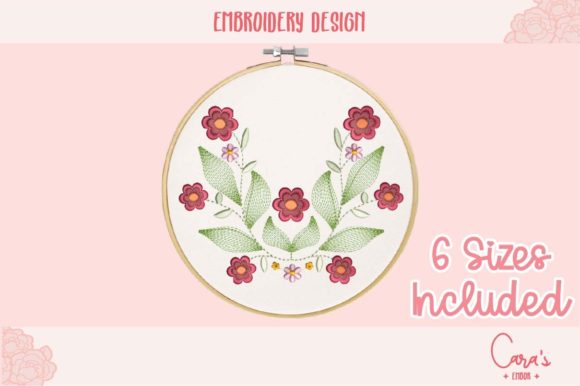
When I opened the Flower Patch embroidery file, what struck me wasn’t flashiness—it was warmth. This isn’t a bold, graphic bloom or a hyper-realistic botanical study. It’s a gentle, hand-drawn-style floral motif with open spacing, balanced petal weight, and just enough detail to read clearly at 3–4 inches wide. The layout feels intentional—not too dense, not too sparse—and the overall shape sits comfortably within a circular or slightly oval footprint. That makes it instantly adaptable for pillow covers, tea towels, and baby onesies without crowding seams or distorting fabric drape.
How It Actually Stitches: Clarity Over Complexity
I tested Flower Patch on three real projects: a linen kitchen towel, a cotton-poplin tote bag, and a lightweight unisex sweatshirt. On the towel, the design held its shape beautifully—no puckering, no thread breakage—even with standard tear-away stabilizer. The satin stitch petals stayed smooth and defined, and the fill stitch centers had just enough texture to feel handmade without looking muddy. On the tote, where fabric tension can vary across seams, the design remained legible and centered—no distortion around gussets or handles. And on the sweatshirt? It surprised me. Despite the knit’s slight stretch, the stitch density felt considered—not so heavy that it stiffened the fabric, but substantial enough to hold up to wear and washing.
Where It Shines (and Where It Needs Thought)
- Perfect for small-batch apparel: Works cleanly on t-shirts, hoodies, and baby bodysuits—especially when placed above the left chest or centered on the back. Its scale reads well from arm’s length, and the floral theme reads as thoughtful, not trendy.
- Natural fit for home goods: Pillow covers, napkins, and aprons gain quiet charm with Flower Patch. It doesn’t shout; it invites touch and slows the eye down—ideal for boutique branding or wedding favors.
- Great for personalized gifts: Pair it with a monogram or date in a simple font, and you’ve got a cohesive, heartfelt holiday or baby gift. No overdesigning needed.
- Cautious use on curved surfaces: Caps and beanies require careful hooping and possibly a cutaway + tear-away combo stabilizer. The outer petals sit close to the edge of the motif—if your hoop shifts even slightly, you risk clipping details.
- Watch thin or dark fabrics: On sheer cotton or black fleece, test thread colors first. Some lighter fill stitches can fade into background texture, especially if the design is scaled down below 2.5 inches.
What It Adds to Your Finished Product—Beyond Stitching
As a designer who sells both digital embroidery files and finished handmade products, I pay attention to how a motif affects perceived value. Flower Patch elevates a plain canvas tote into something that feels curated—not mass-produced. Customers notice the balance between simplicity and care: the way the stem curves, how the leaves taper, the slight variation in petal width. That subtlety builds trust. It says, “This wasn’t auto-generated. Someone chose this.” For Etsy sellers and small shop owners, that nuance translates directly to higher perceived quality, better photo mockups, and stronger repeat engagement.
It also plays well with brand consistency. Whether you’re building a garden-themed nursery line or a minimalist kitchen brand, Flower Patch adapts without demanding redesign. You can adjust thread palette—soft sage and cream for organic baby items, navy and gold for modern table linens—and the core identity stays intact.
Practical Designer Notes Before You Stitch
- Always test on scrap fabric first—especially if you’re using textured weaves (like burlap or terry cloth) or blends with spandex. Stitch density matters more than you think when fabric moves under the needle.
- Check contrast in black-and-white mockups. Some delicate running-stitch accents may vanish on busy backgrounds or low-res previews—critical for digital product listings.
- Confirm hoop size compatibility. If your machine uses smaller hoops (e.g., 4×4"), verify whether Flower Patch fits comfortably—or whether you’ll need to resize thoughtfully (not just shrink, but rebalance spacing).
- Inspect small details at actual stitch-out size. Petal tips, leaf veins, and center motifs should remain distinct—not fused or overly dense—after stitching. If they blur, consider lightening fill stitch density or switching to a finer thread.
- Use appropriate stabilizer for your base fabric. Lightweight cottons often need medium-weight tear-away; knits benefit from light cutaway + topping. Skipping this step risks shadowing or shifting on the final piece.
- Review licensing before selling. Since this is a machine embroidery design intended for commercial use, confirm whether resale of finished embroidered items or redistribution of the digital file is permitted—especially if you're an Etsy seller or craft fair vendor.
A Final Thought: Design That Serves the Maker
Flower Patch isn’t trying to be everything. It doesn’t mimic watercolor, mimic lace, or overload with dimension. What it does—quietly, reliably—is support intention. It gives a custom tote bag personality without overwhelming it. It adds tenderness to a baby blanket without looking cutesy. It works for a holiday gift, a wedding favor, or a small shop’s signature look—because it’s rooted in proportion, restraint, and real-world stitch behavior. As a designer and reviewer, I don’t reach for flashy every time. I reach for what holds up, wears well, and feels like it belongs. Flower Patch does that. Just remember to test, stabilize, and trust your eye—not the preview thumbnail.